
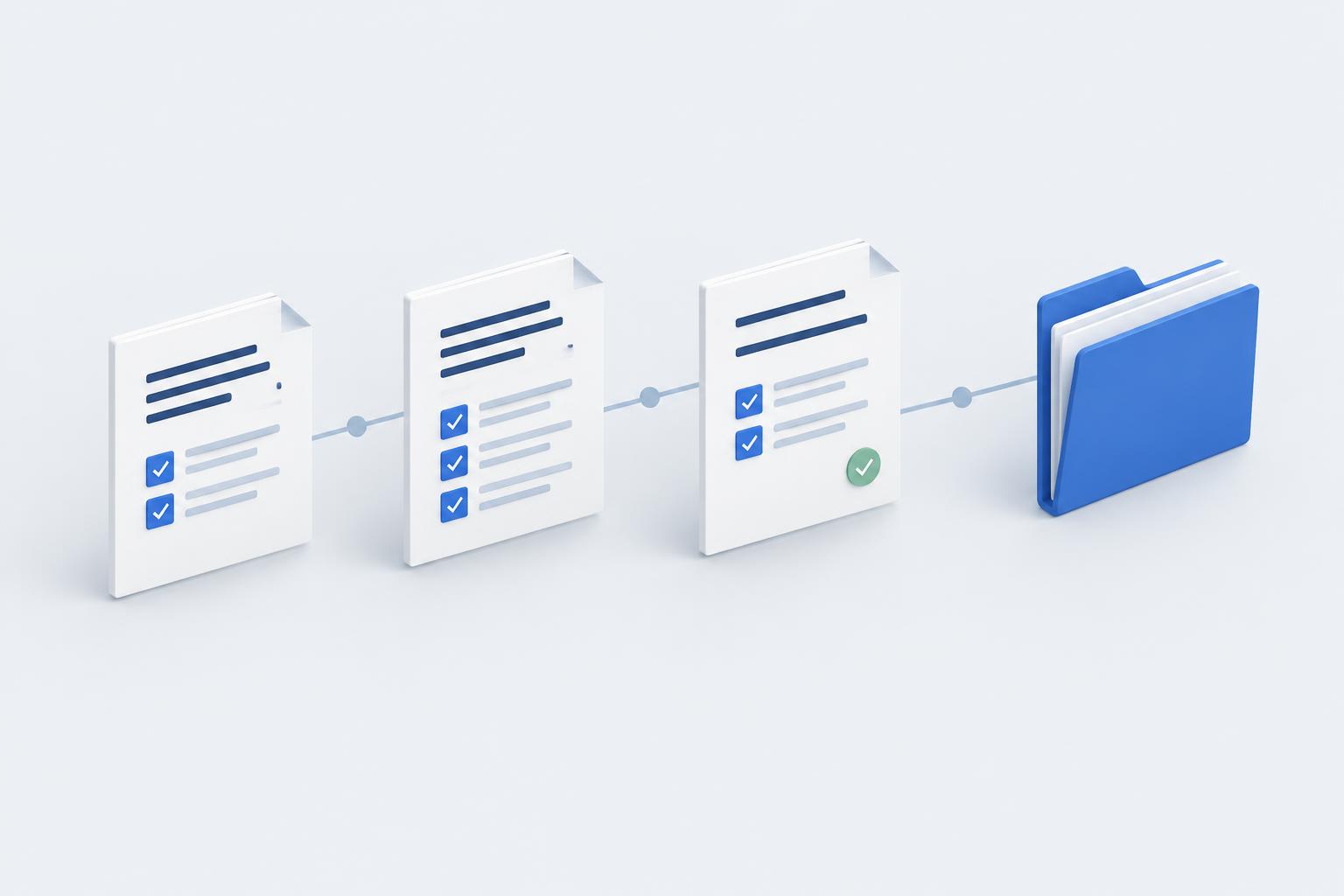
Why document collection becomes a bottleneck
Document chasing often begins with a request that seems clear to the team but is ambiguous to the customer. ‘Send your statements’ leaves unanswered questions: which accounts, which period, what file format and whether every page is needed. The result can be incomplete evidence and another round of messages.
A repeatable collection process reduces avoidable back-and-forth. It does not remove lender-specific requirements or guarantee a faster decision, but it can make each application easier to prepare and hand over.
Make the first request specific
Start with the requirements for the application in front of you, rather than a generic list copied from the last customer. Explain what is needed, why it is being requested and how to provide it. Separate required items from anything still awaiting lender confirmation.
Where a document has a date range or page requirement, state it plainly. Confirm the relevant period with the lender rather than treating a standard period as universal. Use short sentences and a checklist customers can refer back to.
Treat missing and unusable documents differently
A file can be received without satisfying the request. A cropped photograph, an unreadable page or a statement missing its account details may still need follow-up. Track ‘received’ separately from ‘reviewed’ so a complete-looking checklist does not hide outstanding work.
When requesting a replacement, identify the exact problem. Asking for page two is clearer than asking for the whole statement again without explanation.
- Not received: the customer has not supplied the item.
- Received: the file is available but still needs checking.
- Needs clarification: the file is incomplete, unclear or inconsistent.
- Reviewed: the team has checked it against the current request.
Use reminders with judgement
Automated reminders can support consistent follow-up, but they need sensible stop conditions. Stop reminders when the request is satisfied, when the application is paused or when the customer needs a conversation rather than another notification.
Keep reminders brief and specific to outstanding items. Avoid including sensitive financial details in message previews. Provide a contact path for customers who cannot access or supply a requested document.
Platforms such as Sentriq can help reduce manual follow-ups by sending automated email and SMS reminders to customers with outstanding documentation, with uploads received through secure links. Teams can then spend less time chasing paperwork and more time reviewing what has arrived. Request a demo of document collection.
Make uploading straightforward
An upload experience should work on a phone as well as a desktop. Customers should be able to understand the request, provide readable files and see which items remain outstanding without repeating the entire process.
Use the collection methods approved by your organisation. Explain access and handling clearly, and avoid asking customers to scatter sensitive documents across several unrelated communication channels.
Give the team one reliable progress view
Assign an owner to each application and keep requests, files and follow-up notes together. This makes a colleague’s handover easier and helps prevent two team members chasing the same customer for the same item.
Review recurring problems periodically. If a particular document is often missing, improve the wording of the first request before increasing the number of reminders. A clear process is usually more helpful than a louder one.
General educational information, not financial or legal advice. Lender requirements and customer circumstances differ. Final assessment remains with the responsible finance professional or lender.
Back to Resource Centre